OUR OLIVE OIL
Olive oil is the cornerstone of the famous Mediterranean diet. Most people choose olive oil because of its many proven health benefits. The company’s operations reflect its production cycle, which has remained true to its founding values throughout its long history: Highest Quality, Tradition, and Respect for the Earth.
THE OLIVE
The olive grove covers an area of more than 120 hectares, with over 65,000 trees planted using both traditional mechanized and intensive methods. The estates—Ginestares and La Estanca, among others—are located in the municipality of Cascante (Navarra), a town with a long tradition of olive cultivation that once had as many as 15 olive presses in the 1950s. Varieties such as Arbequina, Hojiblanca, Verdial, Arróniz, Arbosana, and Koroneiki are grown there. The favorable climatic conditions do not require special pest control measures, and certified organic fertilizers are used in the organic cultivation of the olive grove.
FROM THE FIELD TO THE MILL
The ideal time to harvest the olives is when most of the fruit on the tree is changing color—just when there are very few green olives left on the branches and some are fully ripe.
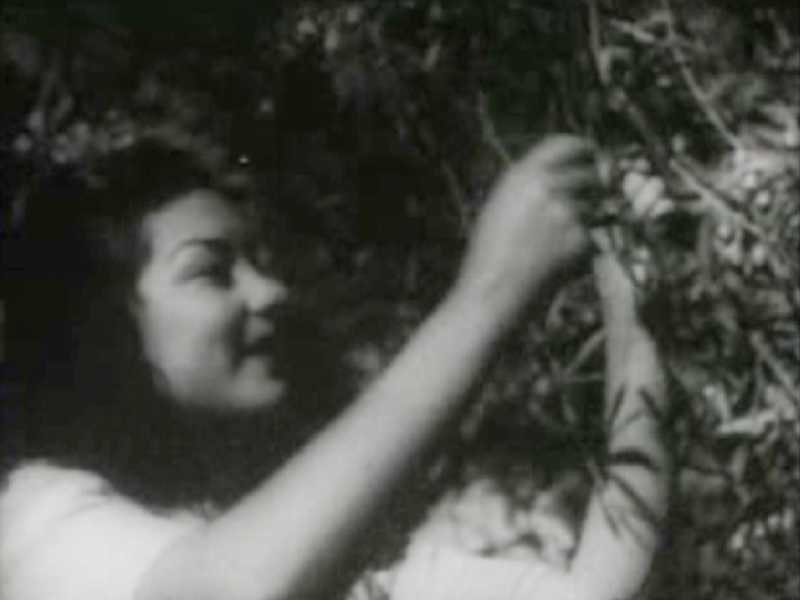
Since time immemorial, olives have been harvested by hand, using a milking-like motion or tapping the branches with a stick so the fruit falls onto a blanket spread beneath the tree. These techniques coexist today with the increasingly widespread practice of mechanical harvesting using specialized machinery that shakes the olive tree. To prevent damage to the olives, they must be transported to the mill in rigid containers that prevent the fruit from breaking. Once the olives have been harvested from the tree, it is important to process the fruit as quickly as possible to preserve all its qualities. The olives are brought to the mill, where branches, leaves, and other impurities are removed. They undergo a washing process, are weighed, and sorted into hoppers according to the required classification—organic, single-variety, PDO, etc.
GRINDING AND MIXING
Once at the mill, the olives enter the grinding phase, which involves crushing and breaking up the whole olives to facilitate the release and separation of the oil they contain. This process yields a paste consisting of a solid component (made up of plant tissue residues) and a liquid component, which contains the oil and water from the fruit. The olives must be milled on the same day they are harvested or, at the latest, within 48 hours, to prevent the oil from losing quality. If this process is delayed any longer, the olives will ferment and the oil will oxidize.
The olive paste obtained after milling is agitated to facilitate the release of the oil. Water circulating through the agitator must not exceed 30°C, to prevent the loss of aromatic compounds and to avoid accelerating oxidation processes. This paste falls into the mixers, where blades rotate it at a carefully calculated speed to maximize the agglomeration of the suspended oil particles.
EXTRACTION AND PROCESSING
Once at the mill, the olives enter the milling phase, which involves crushing and breaking down the whole olives to facilitate the release and separation of the oil they contain. This process yields a paste consisting of a solid component (made up of plant tissue residues) and a liquid component, which contains the oil and water from the fruit. The olives must be milled on the same day they are harvested or, at the latest, within 48 hours, to prevent the oil from losing quality. If this process is delayed any longer, the olives will ferment and the oil will oxidize.
The olive paste obtained after milling is agitated to facilitate the release of the oil. Water circulating through the mixer must not exceed 30°C, to prevent the loss of aromatic compounds and to avoid accelerating oxidation processes. This paste falls into the mixers, where blades rotate it at a carefully calculated speed to maximize the agglomeration of suspended oil particles.
PACKAGING
After passing all quality controls, the oil is bottled, ensuring its traceability; the exact origin of the oil can be verified simply by reading the batch number on the label. From this point on, the oil is ready to be sold and enjoyed by consumers, who have placed their trust in our brand for over 60 years.
At Urzante, we are fully committed to ensuring quality, as evidenced by the meticulous and strict quality controls that accompany our products throughout the entire production process, from the olive grove to the consumer’s palate. To this end, we have a state-of-the-art laboratory where we conduct chemical analyses and sensory evaluations, enabling us to perform routine analyses with professionalism to verify legal parameters and develop new analytical methods.
A highly specialized professional team ensures the efficiency of the entire control process. In turn, these capabilities are also confirmed by various certificates of compliance with internationally recognized quality standards.
OLIVE OIL
Our oil is a product with high nutritional and culinary value. Most olive oil comes from Spain, by far the largest producer, accounting for nearly half of global production. If you want to know where your olive oil comes from, read the information on the labels carefully, as you will find various descriptions that can be quite complicated. Extra virgin olive oil (EVOO) is pure, unrefined, and flawless olive juice with an acidity of less than 0.8%, ideal for use in raw dishes due to its superior quality and high antioxidant content. Regular olive oil is a blend of refined and virgin oils, with a neutral flavor, fewer antioxidants, and better suited for frying.
WHY WE SHOULD USE OLIVE OIL
Olive oil is a monounsaturated fat and the cornerstone of the famous Mediterranean diet. Most people choose olive oil because of its many proven health benefits. Extra virgin olive oils offer even more: a world of bitter and fruity flavors that chefs are harnessing to elevate dishes to a level they never thought possible.
HEALTH BENEFITS OF OLIVE OIL
There are several significant scientific studies demonstrating the benefits of certain foods, including olive oil. Replace other fats like butter with at least two tablespoons of extra virgin olive oil every day, eat plenty of vegetables, and go for a walk, as suggested by medical journals around the world.
Do you have any questions about our products, formats, or distribution? Do you need more information?
“Please contact us using the form, and we’ll get back to you as soon as possible. At Urzante, we believe in direct, friendly, and transparent communication. We’d love to hear from you.”